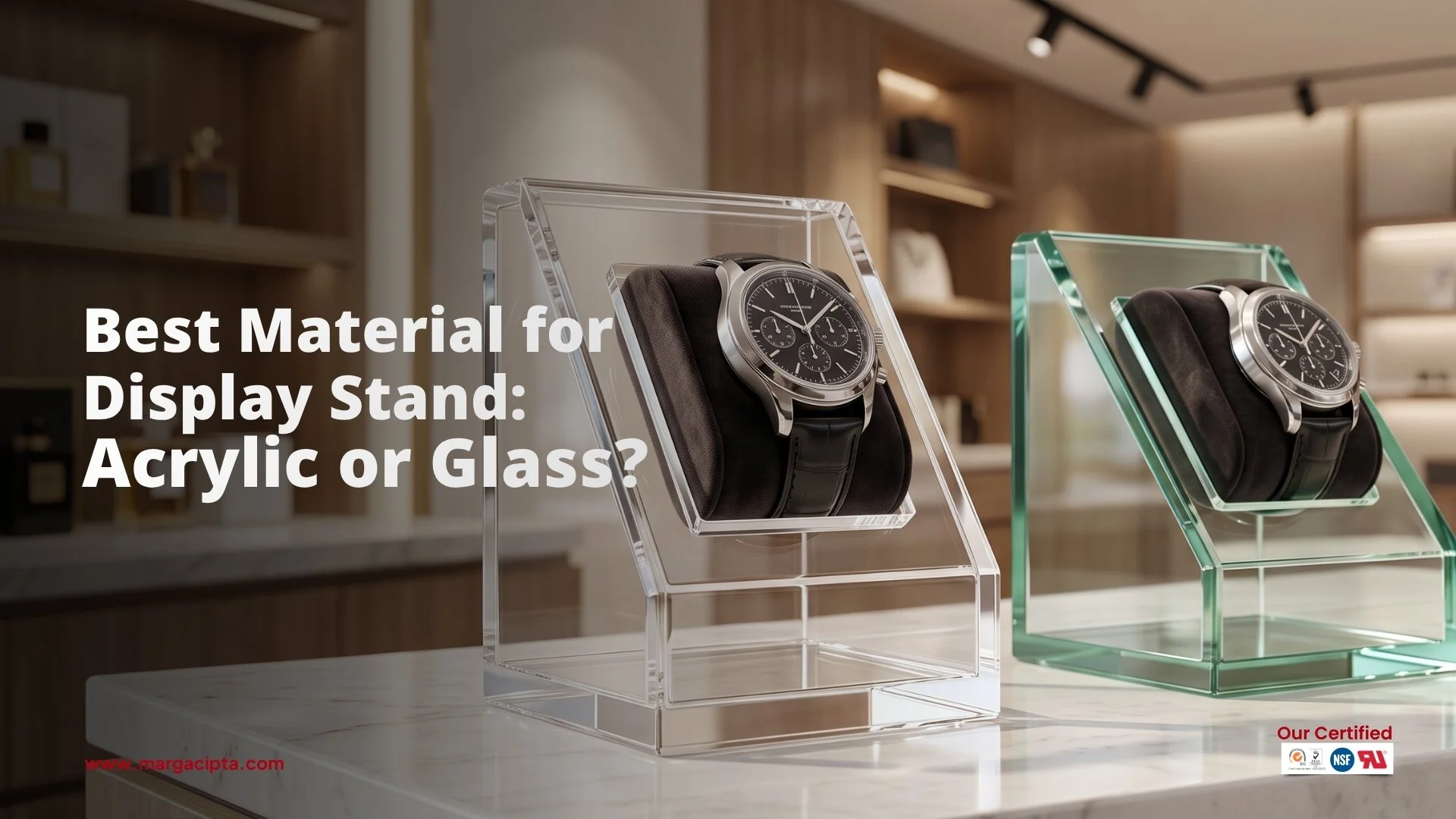
Best Material for Display Stand: Acrylic or Glass?

Informational

For most retail and commercial applications, acrylic is generally the best material for display stands. It provides excellent transparency, is significantly lighter than glass, offers better impact resistance, and is easier to fabricate into custom designs.

While glass remains a premium material for certain luxury applications, acrylic delivers a more practical balance of aesthetics, durability, and cost efficiency.

Acrylic vs Glass at a Glance

Here's a quick comparison between the two materials.

Feature Acrylic Glass
Transparancy Excellent Excellent
Weight Lightweight Heavy
Impact Resistance High Low
Fabrication Easy Limited
Customization Excellent Moderate
Cost Efficiency High Moderate

For most display stand projects, acrylic provides greater flexibility without sacrificing appearance.

Read also: Acrylic Sheet for Retail Displays: Benefits, Applications, and Design Ideas

Clarity and Appearance

Both acrylic and glass offer a clean, transparent look that showcases products effectively.

However, high-quality acrylic sheets provide excellent optical clarity while offering more design flexibility through various finishes, including:

  • Clear
  • Frosted
  • Satin
  • Colored
  • Mirrored

These options allow businesses to create customized displays that match their branding.

Durability

Display stands are frequently moved, cleaned, and handled.

Acrylic performs well because it is more impact-resistant than glass. If accidentally dropped or bumped, acrylic is less likely to shatter.

Glass, while visually elegant, is more fragile and requires careful handling during transportation and installation.

Weight and Installation

Acrylic is considerably lighter than glass, making it easier to:

  • Transport
  • Install
  • Rearrange
  • Store

This advantage is especially valuable for exhibition displays, retail promotions, and modular merchandising systems.

Fabrication Flexibility

One of acrylic's biggest advantages is its compatibility with modern fabrication methods.

Acrylic sheets can be:

  • Laser cut
  • CNC machined
  • Thermoformed
  • Engraved
  • UV printed

This allows designers to produce highly customized display stands with clean edges and intricate details.

Glass generally requires more specialized processing and offers fewer customization options.

Cost Considerations

Acrylic is often the more cost-effective solution.

Lower transportation costs, easier fabrication, and reduced breakage risks contribute to better overall project value.

For businesses producing multiple display stands, acrylic offers significant long-term savings.

When Glass May Be Suitable

Although acrylic is preferred for most applications, glass may still be suitable for:

  • Luxury furniture
  • Permanent architectural installations
  • High-end decorative displays

However, these projects often involve higher installation costs and stricter handling requirements.

Read also: How to Bend Acrylic Sheet: Methods, Tools, and Best Practices

Why Material Quality Matters

Regardless of the material chosen, quality has a direct impact on the final result.

Premium acrylic sheets provide:

  • Better clarity
  • Consistent thickness
  • Cleaner fabrication
  • Improved durability
  • Long-lasting appearance

Marga Cipta supplies high-quality acrylic sheets suitable for display stands, retail displays, product showcases, and commercial fabrication projects.

Conclusion

When comparing the best material for display stand—acrylic or glass—acrylic is the preferred choice for most retail, commercial, and promotional applications.

Its combination of clarity, lightweight construction, durability, and fabrication flexibility makes it a reliable solution for modern display systems.

Build Better Display Stands with Marga Cipta

Looking for premium acrylic sheets for your next display project? Marga Cipta offers high-quality acrylic sheets in various sizes, thicknesses, and finishes to meet your fabrication needs.

For inquiries or orders, email info@margacipta.com.

For product updates, inspiration, and application ideas, follow Instagram @margacipta.

News Release

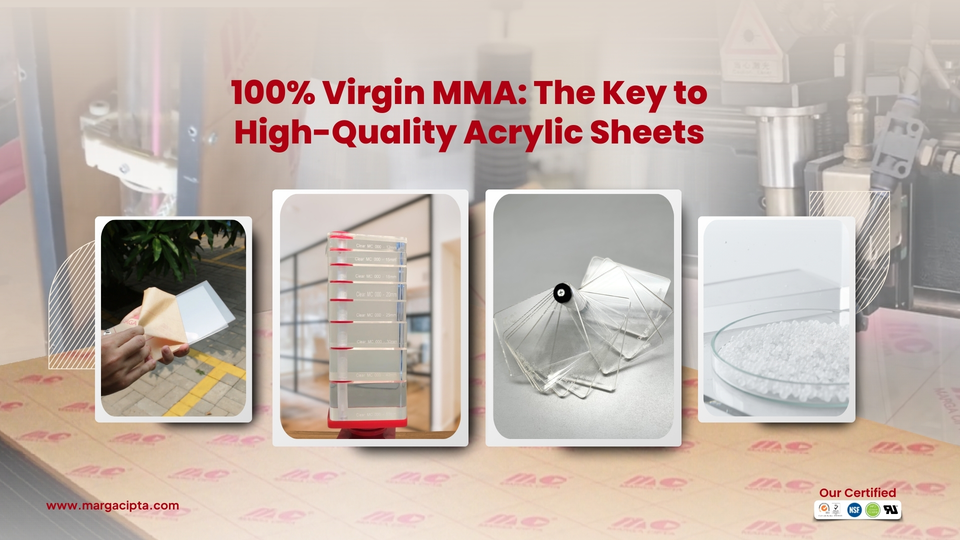
100% Virgin MMA: The Key to High-Quality Acrylic Sheets

When it comes to producing premium acrylic sheets, the choice of raw materials makes all the difference. The highest-quality acrylic is manufactured using 100% virgin MMA (Methyl Methacrylate)

Unlike recycled or blended materials, virgin MMA guarantees outstanding clarity, strength, and long-term durability. 

This is why industries that demand precision and consistency, such as signage, architecture, medical, and food-related sectors, use acrylic made with virgin MMA.

What is Virgin MMA in Acrylic?

Methyl Methacrylate, or MMA, is the primary raw ingredient used in acrylic sheet production. When a sheet is labeled 100% virgin MMA, it means the acrylic is made from pure, first-use material with no recycled additives. 

This ensures that the end product is free from impurities, bubbles, or inconsistencies that could affect appearance and performance. By contrast, recycled or mixed-content acrylic often suffers from discoloration, reduced clarity, and shorter lifespan. 

For applications where quality is non-negotiable, virgin MMA remains the industry’s preferred standard.

Read also: What Is Cast Acrylic Used For? A Closer Look

Advantages of 100% Virgin MMA in Acrylic Sheets

1. Exceptional Clarity

One of the most visible advantages of virgin MMA acrylic is its crystal-clear transparency. With excellent light transmission up to 92%, these sheets rival the clarity of glass while being lighter and safer. 

This makes acrylic ideal for signage, displays, and architectural features where visual impact matters.

2. Stronger and More Durable

Acrylic made from recycled content can become brittle over time. 

In contrast, 100% virgin MMA produces sheets with superior impact strength and durability. They are less likely to crack, making them suitable for heavy-duty applications such as construction panels, protective barriers, and furniture.

3. Consistent Quality

Virgin MMA eliminates impurities that often cause uneven color or thickness. As a result, every sheet maintains uniform optical and mechanical properties

This consistency is critical for industries that require reliable materials, such as medical equipment manufacturing and precision engineering.

4. Better Weather and UV Resistance

Outdoor projects demand materials that can withstand sunlight, rain, and temperature changes.

Virgin MMA-based acrylic is resistant to yellowing, warping, and degradation, making it perfect for outdoor signage, skylights, and architectural.

5. Safe for Sensitive Applications

Because of its purity, virgin MMA acrylic is safer for environments where hygiene is a priority.

Certified sheets can be used in food displays, medical devices, and cleanroom facilities without risk of contamination. Some variants are even NSF-certified, ensuring compliance with international safety standards.

Read also: Why Cast Acrylic Is Better Than Glass: Benefits You Should Know

Applications of Virgin MMA Acrylic Sheets

The versatility of 100% virgin MMA acrylic makes it popular across industries:

  • Signage and Displays: Clear surfaces enhance print and lighting, delivering vibrant visuals.
  • Construction and Architecture: Used in windows, partitions, skylights, and decorative panels due to its durability.
  • Food Industry: NSF-certified acrylic ensures safety for food contact, ideal for display cases and hygienic covers.
  • Medical and Laboratory Equipment: Trusted for its purity and reliability in sensitive environments.
  • Furniture and Interior Design: Offers both aesthetics and functionality with long-lasting strength.

Choosing acrylic sheets made from 100% virgin MMA is an investment in quality, safety, and longevity. With superior clarity, strength, and resistance to outdoor conditions, virgin MMA ensures that acrylic sheets perform at the highest standard. 

Whether you are in signage, construction, food, or medical industries, selecting virgin MMA acrylic helps you achieve the best results.

PT Margacipta Wirasentosa produces high-quality acrylic using 100% virgin MMA, delivering consistent clarity, strength, and NSF-certified options (clear and white opal). Contact us to info@margacipta.com to get the right acrylic solution for your business.

What Is Acrylic Made Of? Composition, Properties, and Uses Explained

Acrylic is made from polymethyl methacrylate (PMMA), a transparent thermoplastic created from methyl methacrylate (MMA) monomers. This material is known for its excellent clarity, durability, and versatility, making it one of the most widely used alternatives to glass.

From signage and displays to architectural and industrial applications, acrylic sheets are valued for their combination of strength, aesthetics, and ease of fabrication.

Understanding what acrylic is made of can help businesses, designers, and manufacturers choose the right material for their projects.

Read also: What is Satin Acrylic? A Complete Guide to Its Look and Function

What Is Acrylic?

Acrylic is a synthetic plastic material that belongs to the family of thermoplastics. The most common form of acrylic used in sheets is PMMA, which is produced through a polymerization process.

During manufacturing, small molecules called methyl methacrylate monomers are chemically bonded together to form long polymer chains. The result is a strong, transparent material with excellent optical properties.

Because of its glass-like appearance and practical advantages, acrylic has become a popular material in various industries.

Main Components of Acrylic

The primary ingredient in acrylic is:

Polymethyl Methacrylate (PMMA)

PMMA is a transparent plastic that offers:

  • High optical clarity
  • Good weather resistance
  • Lightweight performance
  • Excellent fabrication flexibility

This composition gives acrylic its distinctive combination of transparency and durability.

Depending on the manufacturing process, additives may also be incorporated to enhance specific properties such as UV resistance, color stability, or surface finish.

Key Properties of Acrylic

One of the reasons acrylic is so widely used is its unique set of material properties.

Excellent Clarity

Acrylic offers outstanding light transmission, allowing it to achieve a clear and bright appearance. This makes it ideal for applications where visibility is important.

Lightweight Structure

Compared to glass, acrylic is significantly lighter, making transportation, installation, and fabrication easier.

Weather Resistance

High-quality acrylic sheets can withstand prolonged exposure to sunlight and outdoor conditions while maintaining their appearance.

Impact Resistance

Although not as impact-resistant as polycarbonate, acrylic is generally stronger and more durable than traditional glass.

Easy Fabrication

Acrylic can be cut, drilled, engraved, thermoformed, and printed, making it suitable for a wide range of custom projects.

Common Types of Acrylic Sheets

Acrylic sheets are available in various forms, including:

  • Clear acrylic sheets
  • Colored acrylic sheets
  • Frosted acrylic sheets
  • Satin acrylic sheets
  • Mirrored acrylic sheets

Each type is designed to meet different aesthetic and functional requirements.

Common Uses of Acrylic

Because of its versatility, acrylic is used in numerous applications.

Popular examples include:

1. Signage and Displays

Acrylic's clarity and printability make it a preferred material for retail and commercial signage.

2. Interior Design

Decorative panels, partitions, and furniture elements often utilize acrylic for its modern appearance.

3. Industrial Applications

Many industries use acrylic for machine guards, protective covers, and fabricated components.

4. Architectural Features

Acrylic is frequently incorporated into building designs, skylights, and decorative structures.

Read also: Is Acrylic Waterproof? Understanding Its Water Resistance

Why Material Quality Matters

Not all acrylic sheets offer the same performance.

High-quality acrylic provides:

  • Better clarity
  • Consistent thickness
  • Improved weather resistance
  • Reliable fabrication results

Marga Cipta supplies premium acrylic sheets suitable for signage, displays, interiors, fabrication, and industrial applications.

Conclusion

So, what is acrylic made of? Acrylic is primarily composed of polymethyl methacrylate (PMMA), a transparent thermoplastic known for its durability, clarity, and versatility.

Its unique composition allows it to be used across a wide range of industries and applications. By choosing high-quality acrylic sheets, businesses and manufacturers can achieve reliable performance and professional results.

Ready to explore our cast acrylic options? At Margacipta Wirasentosa, we offer high-quality clear cast acrylic sheets from 100% virgin MMA in various thicknesses and custom sizes to fit your needs.

Reach out to our Instagram or download our Product Catalog for more information.

How to Choose UV Resistant Acrylic Sheets for Outdoor Applications

Acrylic sheets are widely used in outdoor environments because they offer excellent clarity, lightweight properties, and strong impact resistance. However, when selecting acrylic for outdoor projects, UV resistance becomes one of the most important factors to consider.

Without proper UV protection, plastic materials can gradually lose transparency, become brittle, or develop surface discoloration after prolonged sun exposure. This is why many architects, designers, and fabricators choose UV resistant acrylic sheets for outdoor applications.

This guide explains how to choose the right acrylic sheets for outdoor environments to ensure durability and long-term performance.

1. Look for Built-In UV Resistance

The most important feature of outdoor acrylic sheets is UV stability.

UV resistant acrylic sheets are specially formulated to withstand long-term exposure to sunlight without significant degradation. This helps prevent common issues such as:

  • Yellowing or discoloration
  • Surface cracking
  • Reduced transparency
  • Material brittleness

High-quality acrylic sheets can maintain their optical clarity and structural strength for many years, even in outdoor conditions.

Read also: Cost Breakdown: How Acrylic Can Help You Save Budget in Long-Term Projects

2. Consider the Application Requirements

Different outdoor applications require different types of acrylic sheets. Before choosing a material, it is important to understand how the acrylic will be used.

Common outdoor applications include:

  • Outdoor signage and advertising panels
  • Architectural panels and skylights
  • Protective barriers
  • Greenhouse panels
  • Display cases and retail signage

For signage and display purposes, high transparency and surface quality are essential. For structural or protective panels, impact resistance and thickness may be more important.

3. Choose the Right Thickness

Acrylic sheets are available in various thickness options, typically ranging from a few millimeters to much thicker panels for industrial use.

For outdoor applications:

  • 3–5 mm sheets are commonly used for signage and display panels
  • 6–10 mm sheets are suitable for structural panels and partitions
  • Thicker sheets may be required for heavy-duty installations

Selecting the correct thickness helps ensure stability, durability, and resistance to environmental stress.

Read also: How to Identify High-Quality Cast Acrylic Sheets | Buyer’s Guide

4. Evaluate Optical Clarity and Surface Quality

One of the biggest advantages of acrylic over other materials is its excellent optical clarity. High-quality acrylic sheets can offer transparency levels of up to 92% light transmission, which is even higher than glass.

For outdoor branding or display applications, consistent surface quality is essential to maintain a clean and professional appearance.

Poor-quality sheets may have issues such as:

  • Uneven surfaces
  • Distortion
  • Lower transparency

These problems can affect both aesthetics and performance.

5. Choose Reliable Acrylic Sheet Manufacturers

The quality of acrylic sheets depends greatly on the manufacturing process and raw materials used. Reliable manufacturers typically provide consistent thickness, strong molecular structure, and better long-term durability.

For projects that require high performance and stability, cast acrylic sheets are often preferred because they offer better strength, chemical resistance, and fabrication quality compared to lower-grade alternatives.

Conclusion

Choosing the right UV resistant acrylic sheet for outdoor use ensures your project remains durable, visually appealing, and functional for years.

When selecting acrylic sheets for outdoor environments, consider the following factors:

  • UV resistance
  • Thickness and strength
  • Optical clarity
  • Application requirements
  • Manufacturer reliability

By selecting high-quality acrylic sheets designed for outdoor performance, you can reduce maintenance costs and improve the lifespan of your project.

Cast Acrylic vs Extruded, Which One Is Better?

Acrylic sheets are a popular material in various industries. It is used from signage and interior design to industrial fabrication. 

However, many people struggle to understand the real difference and what to choose between cast acrylic and extruded acrylic for their projects.

While both materials may look similar at first glance, their performance, durability, and manufacturing quality set them apart.

Read more to know the key differences and explain why cast acrylic sheets are often the superior choice.

What is Cast Acrylic Sheet?

Cast acrylic sheet is made by mixing liquid methyl methacrylate monomer (MMA) with initiators and pouring it into a mold. This process allows the sheet to cure slowly, resulting in a high-quality finish and consistent thickness.

Advantages of Cast Acrylic

  • Higher optical clarity: Make it excellent for display cases and premium applications.
  • Greater chemical resistance: Ideal for laboratories or environments with exposure to solvents.
  • Easier to fabricate: Can be laser cut, machined, and polished with less internal stress.
  • Variety of colors and thicknesses: Better customization options.

Read also: Why Cast Acrylic Is Better Than Glass: Benefits You Should Know

What is Extruded Acrylic Sheet?

Extruded acrylic sheet is manufactured by pushing acrylic resin through a machine into a continuous sheet. This process is faster and more cost-efficient, which makes extruded acrylic widely available and affordable.

Advantages of Extruded Acrylic:

  • Cost-effective: Typically more affordable than cast acrylic.
  • Consistent thickness: Great for applications that require precise dimensions.
  • Good for vacuum forming and thermoforming: Softens faster when heated.
  • Smooth surface: Suitable for printing and general use.

Key Differences at a Glance

Feature

Cast Acrylic Sheet

Extruded Acrylic Sheet

Manufacturing Process

Mold Cast

Machine-extruded

Optical Clarity

Superior

Good

Thickness Tolerance

Slightly less consistent

Highly consistent

Fabrication

Easier to machine and polish

Softer, easier to thermoform

Chemical Resistance

Higher

Lower

Price

Higher

Lower

Which One Should You Choose?

The right acrylic sheet depends on your project needs:

  • Choose cast acrylic if you need superior clarity, better strength, or are doing high-end fabrication or laser cutting.
  • Choose extruded acrylic if you’re working with a tight budget, need consistent sizing, or plan to thermoform the material.

Read also: Choose the Right Cast Acrylic Color for Your Project

At Margacipta Wirasentosa, we provide high-quality cast acrylic sheets tailored for B2B needs. Whether you're producing product displays, signage, furniture, or custom designs, we have the right solution for you.

  • Available in multiple colors & finishes
  • Custom size & cutting options
  • Locally made in Indonesia

Understanding the difference between cast acrylic sheet vs extruded acrylic sheet is essential before starting your next project. Each has its strengths, and choosing the right one can save you time, cost, and effort.

Contact Marga Cipta today or visit our Instagram (@margacipta) for more product details.